
| User Roles |  Admin Admin |  Staff contributor Staff contributor | External contributor | ✗Pulse user |
If the financial data in a client file is incomplete or incorrect, you can use the Adjustments feature in Silverfin to correct amounts. For example, you may need to update numbers on the balance sheet. This article explains how to create adjustments in different ways, the difference between internal and external adjustments, and how to post adjustments once they have been created.
Table of contents
- How do I create an adjustment from the Adjustments tab?
- How do I create an adjustment from within an account?
- How do I create an adjustment from the left navigation panel?
- How do I complete the adjustment?
- Can I upload adjustments from Excel?
- What is the difference between internal and external adjustments?
- How do I post adjustments?
- What else should I know about adjustments?
Adjustments can be created in different ways. There are three places in Silverfin where you can open a new adjustment. Whichever route you take, you then complete the same adjustment form.
How do I create an adjustment from the Adjustments tab?
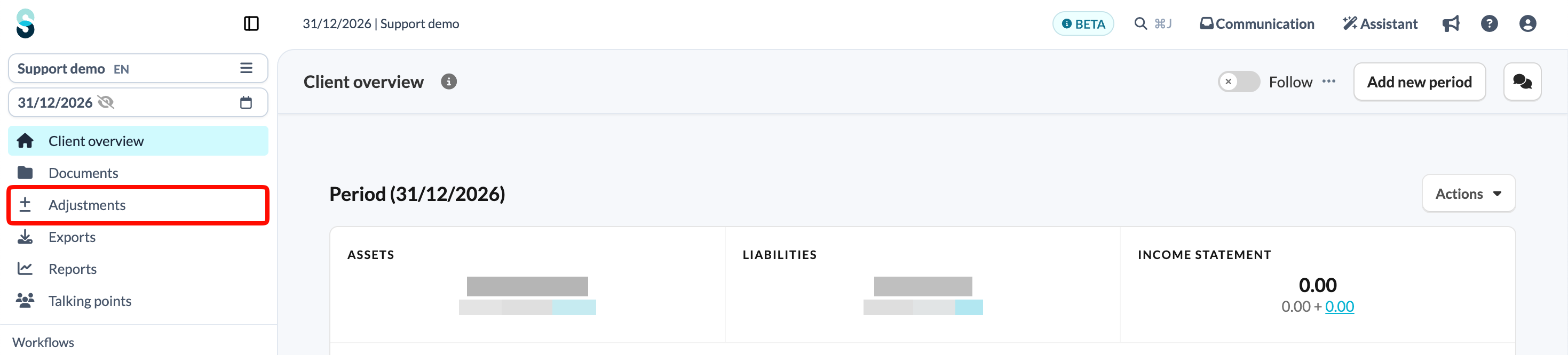
- Through the left navigation panel, click on Adjustments.
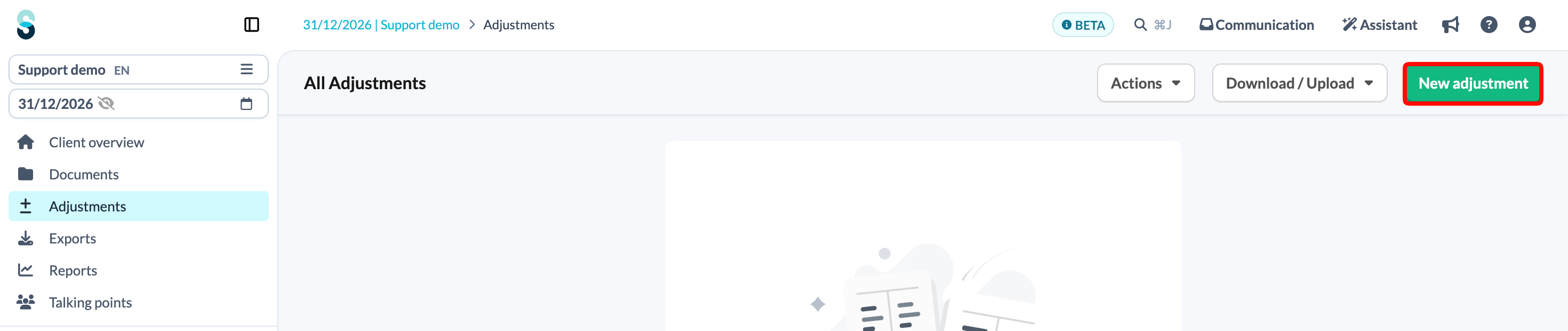
- Click New adjustment. The adjustment form opens.
Now complete the form as described in How do I complete the adjustment?
How do I create an adjustment from within an account?
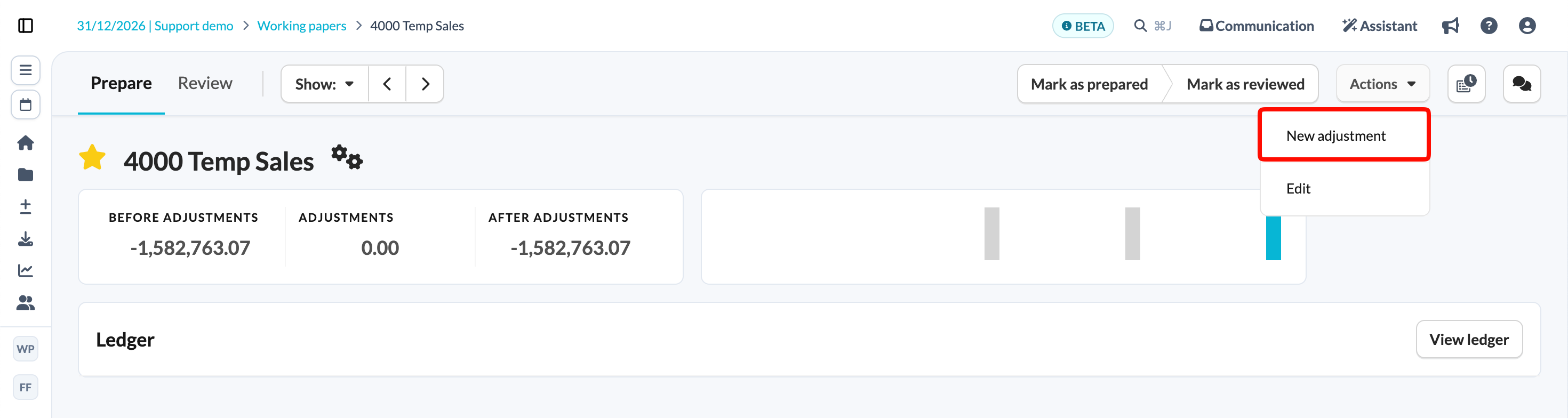
- Open the account.
- Through Actions, click on New adjustment. The adjustment form opens.
Now complete the form as described in How do I complete the adjustment?
How do I create an adjustment from the left navigation panel?
This is the quickest route if you are already working elsewhere in the file, because you do not need to open the Adjustments tab first.
- You can open the left navigation panel at any time from within the file.
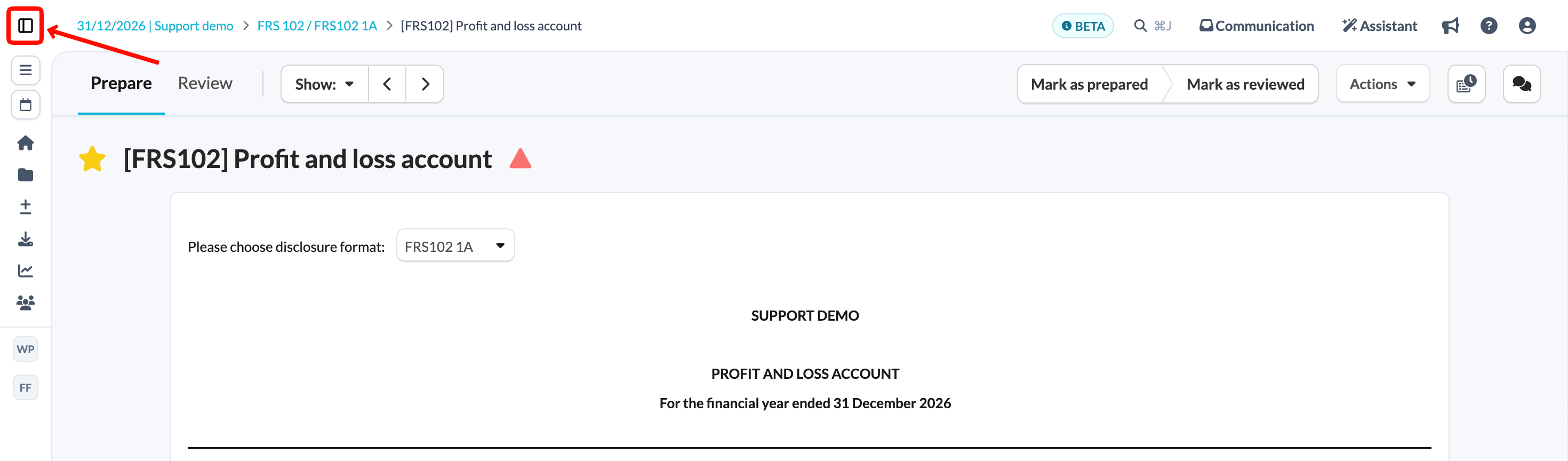
- Hover your cursor over the Adjustments option.
- The + sign will then appear, allowing you to add an adjustment immediately through the adjustment form.
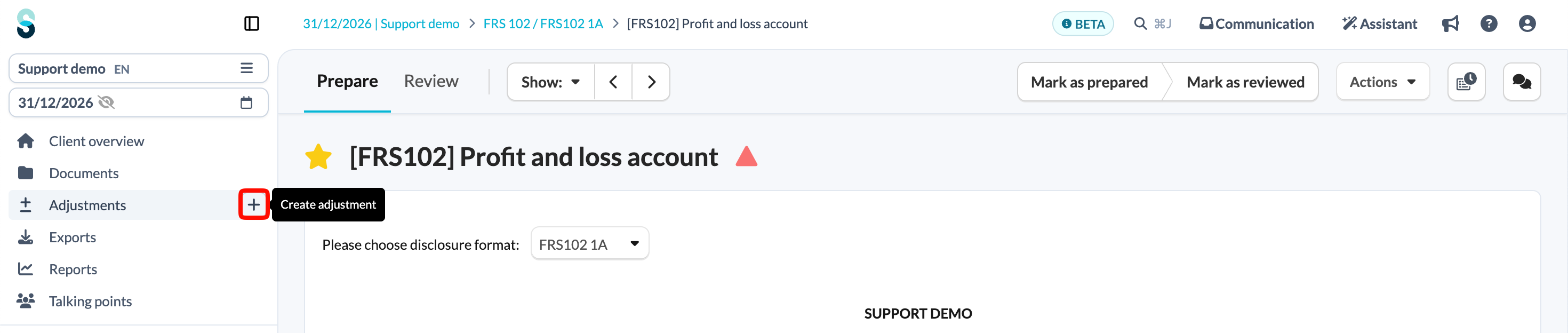
Now complete the form as described in How do I complete the adjustment?
How do I complete the adjustment?
The steps below are the same whichever route you used to open the adjustment form.
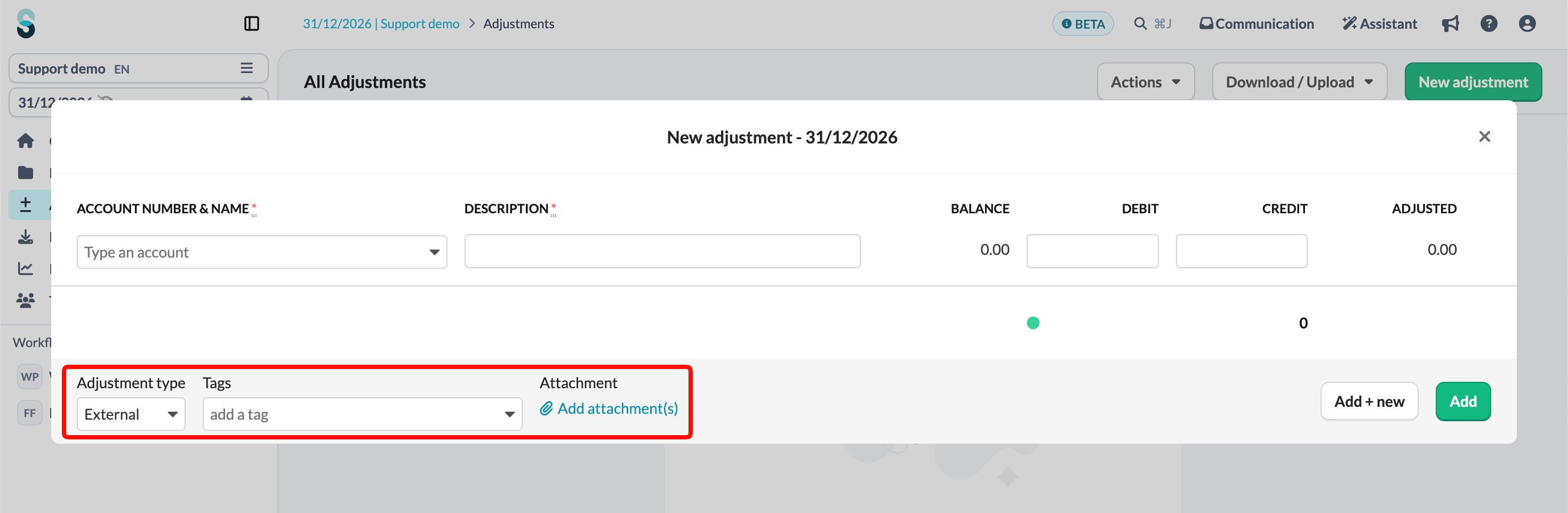
- Enter the account number and description. If you started from within an account, you only need to enter the description.
- Add attachments if needed.
- Choose the adjustment type: Internal or External.
- Choose a tag if applicable.
- Click Add to save the adjustment, or Add + new to create another adjustment.
Can I upload adjustments from Excel?
Yes. You can also upload adjustments from Excel instead of creating them one by one.
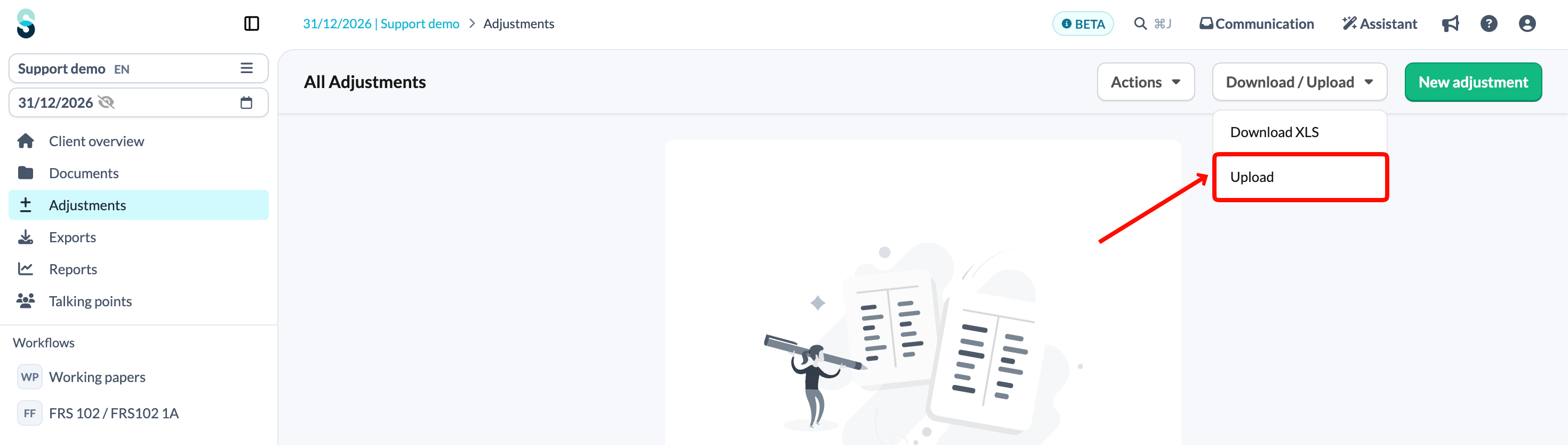
- In the Adjustments tab, open the Download/Upload menu.
- Select Upload.
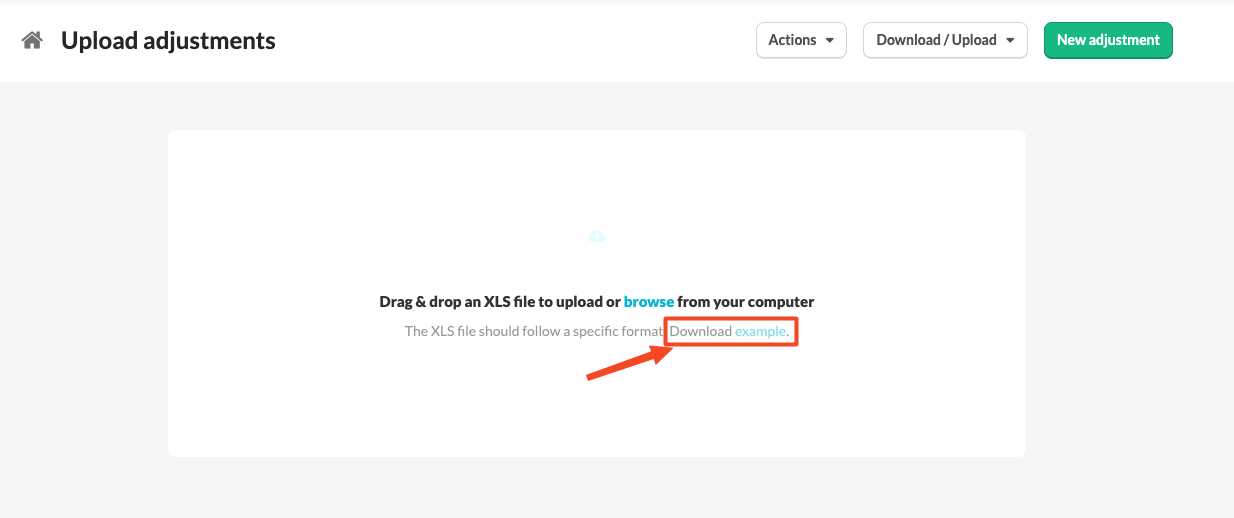
- Drag & drop the file or browse to upload it. Alternatively, use the suggested adjustment template to get started. You can find an example template at the bottom of the article.
Adjustment template rules
- Leave an empty line between each adjustment.
- Fill in either account_number, original_account_number, or both.
- If using tags or categories, add them only on the first line of the adjustment.
- Tags must match the existing configuration.
- The category must be either Internal or External.
- Debit and credit amounts must always be positive.
- Please ensure that all amounts in the Excel file are filled in and do not have a 0.00 value. This will help prevent potential processing errors.
What is the difference between internal and external adjustments?
- When creating an adjustment, select Internal or External.
- This distinction is used for reporting purposes. It allows reports to be tailored to their intended audience by showing only the relevant adjustments.
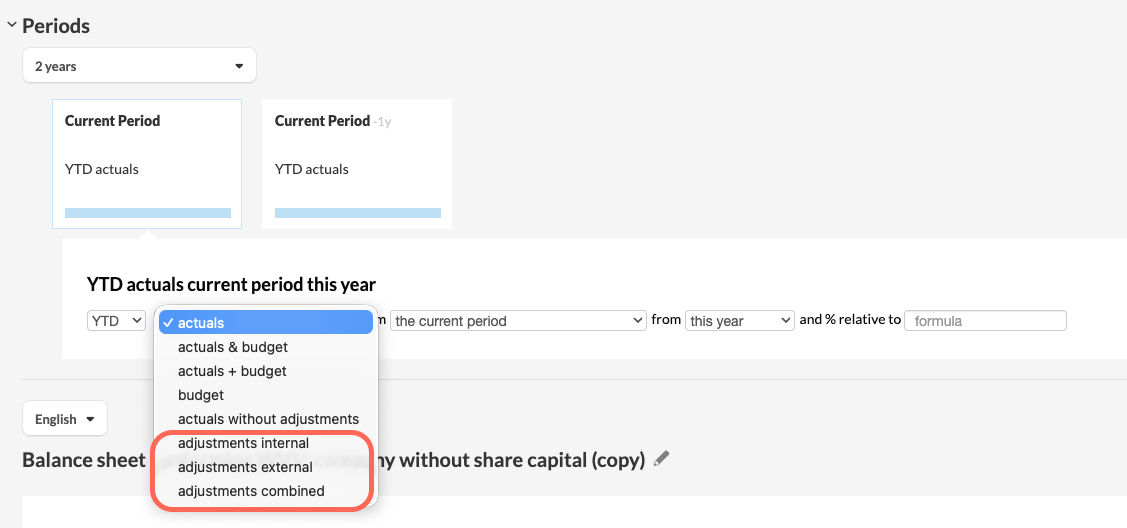
- Note: The internal or external classification is not based on who advised the booking. It is independent of whether the adjustment was created by an internal or external user.
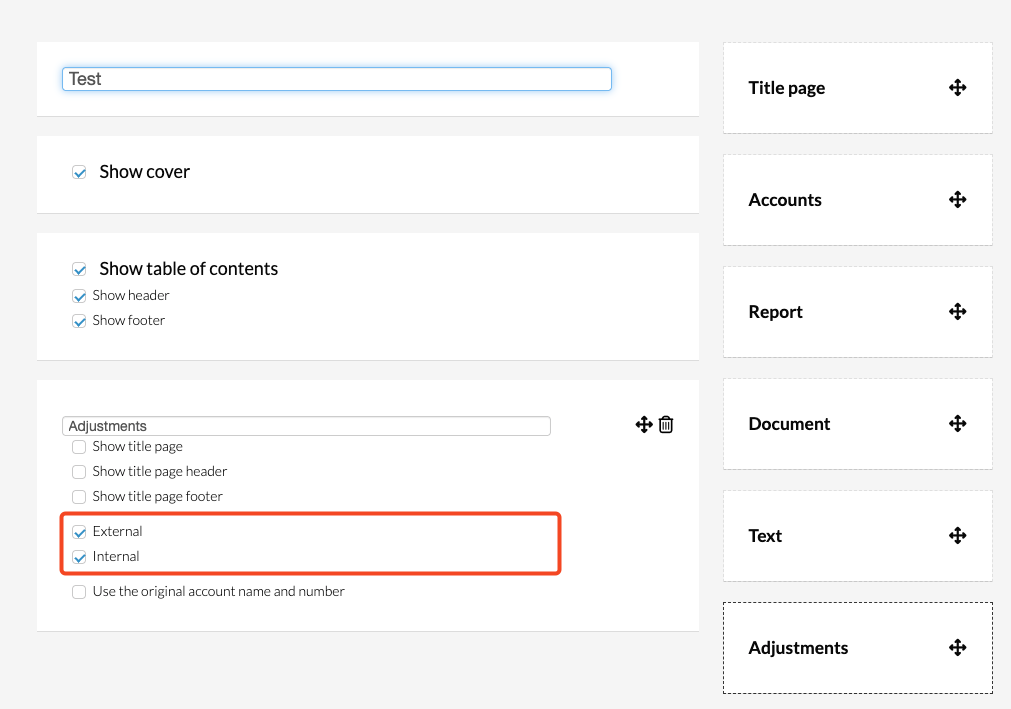
- During export, you can choose to include only internal adjustments, only external adjustments, or both.
How do I post adjustments?
Once adjustments are created, you need to mark them as posted. Silverfin only imports data from your bookkeeping system, so adjustments made in Silverfin do not sync back automatically. You must also process them in your accounting software.
Posting all adjustments
- In the client’s Adjustments tab, click Download/Upload → Download XLS.
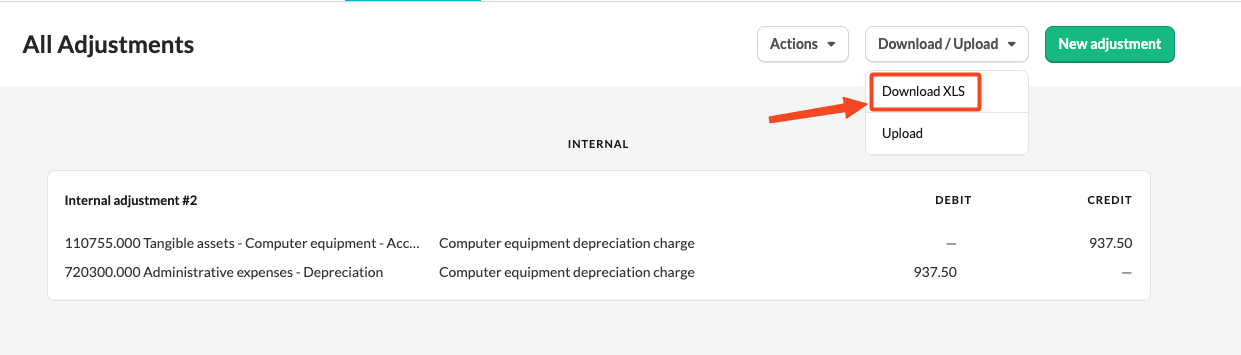
- Import the file into your bookkeeping software.
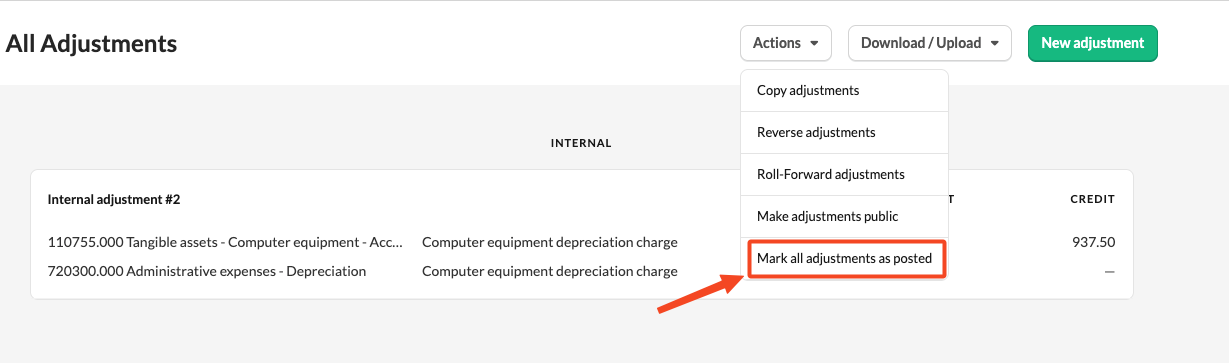
- Back in Silverfin, go to Adjustments → Actions → Mark all adjustments as posted. This prevents adjustments from being duplicated when data in Silverfin is resynced or replaced.
Posting a single adjustment
- If a specific adjustment has already been processed in your bookkeeping system, you can mark just that entry as Posted.
- To do this, go to the individual adjustment, hover over it and select the Mark as posted button.

What else should I know about adjustments?
- Adjustments apply only to the period in which they are created. They are not automatically carried over to the next period, but they can be copied if needed. For more details, read the article on how to copy adjustments into the next period.
- Adjustments cannot include lines with no debit or credit values. Currently, no error message is shown if this occurs – the adjustment simply won’t save.
- The Adjustments tab does not include options to post To-Do’s or Notes.
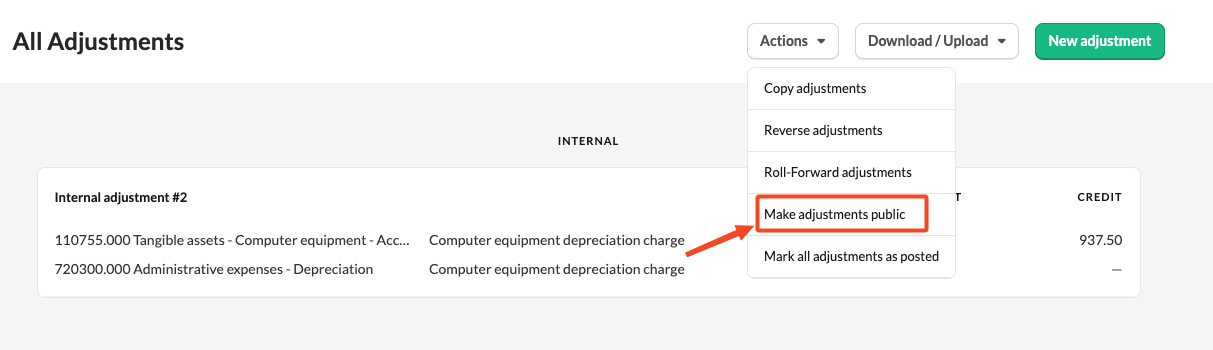
- Pulse users can view and download adjustments once the period is public and the adjustments have been made public via the Action button:
- Accounts can be created manually via an adjustment. Read more in the following article: How do I add a new account in Silverfin? If a mapping list is active, the new account must be mapped.
With these methods, you can ensure adjustments in Silverfin are created and processed correctly while keeping your accounting data aligned.
Silverfin only imports data from your bookkeeping system. Adjustments made in Silverfin do not sync back automatically. You must also process them in your accounting software.